Fuel Scale Charges 2024 Explained: A UK Buyer's Guide
TL;DR: Fuel scale charges 2024 usually mean the HMRC VAT fuel scale charge for company cars in the UK. If your VAT-registered business pays for fuel and there is any private use, you may reclaim VAT on all fuel and then pay output VAT using HMRC’s scale charge table based on the car’s CO2 emissions. However, this is not always the cheapest option, so many businesses compare it with keeping detailed mileage records instead.
Fuel scale charges in 2024 are HMRC’s standard VAT charges used when a UK VAT-registered business provides road fuel for private use in company cars. In short, instead of calculating VAT on the exact private fuel used, a business can apply a set charge based on the car’s CO2 band. According to UK VAT guidance, this approach can simplify administration, but it may cost more than alternatives where private mileage is low.
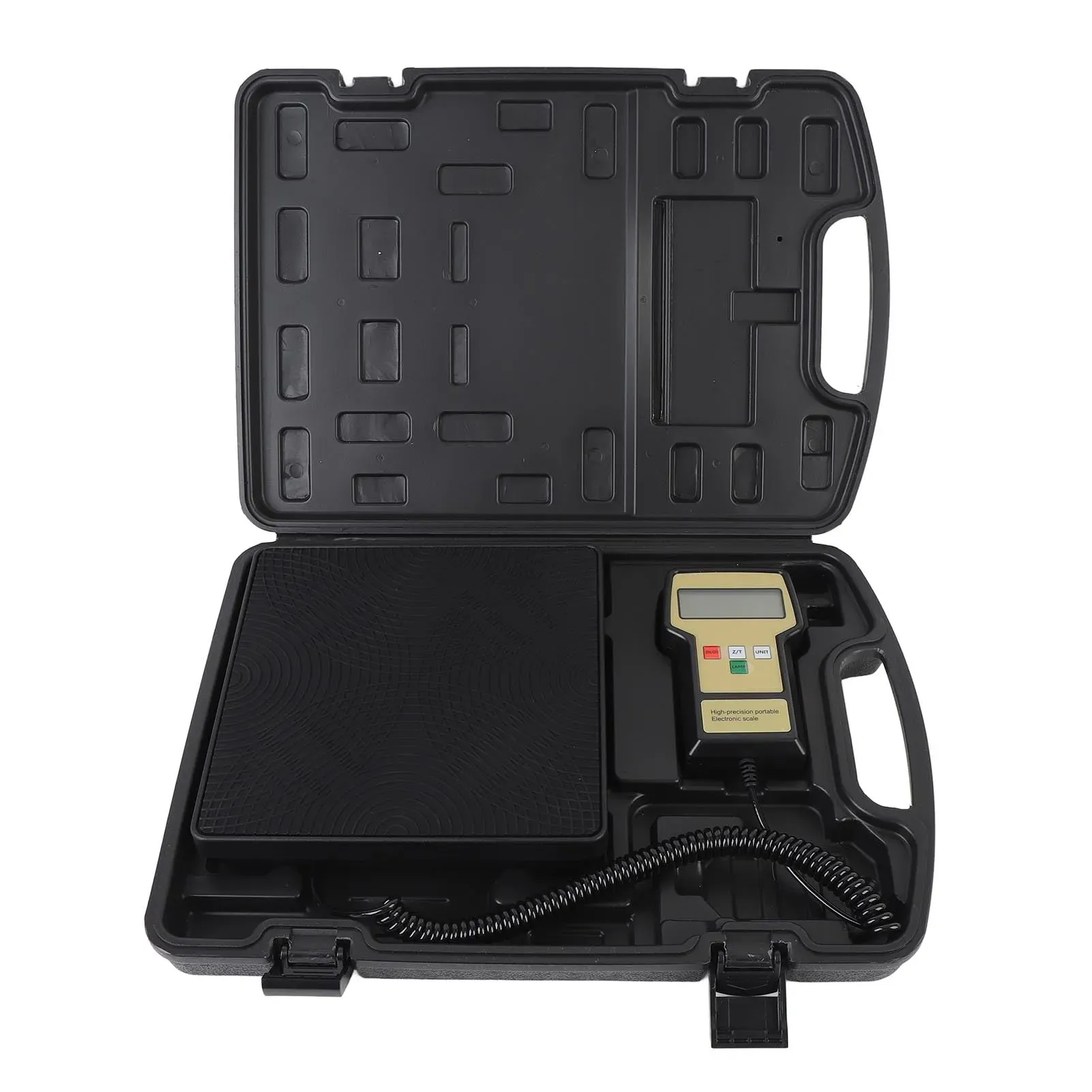
For engineers working in demanding environments, accuracy matters. That same mindset applies when buying tools for refrigerant charging and recovery. HVACly focuses on precision HVAC refrigerant scales for field engineers, with 5g accuracy and a 100kg capacity designed to support F-Gas compliant charging and recovery. Based on our experience supporting UK field engineers, businesses that control measurements well also tend to manage tax, fuel and equipment costs more effectively.
This guide explains what buyers in the UK need to know about fuel scale charges 2024, where confusion often arises, and how to approach the subject with confidence.
Key Takeaways
- Fuel scale charges 2024 usually refer to HMRC fuel scale charge rules affecting VAT where businesses provide fuel for private use in company cars.
- The charge is designed to simplify VAT accounting, but it is not always the cheapest option for every business.
- Whether a scale charge applies depends on the vehicle type, private use and how fuel is provided.
- Accurate records remain essential, even where a flat-rate style charge is used.
- Buyers comparing running costs in 2024 should look at fuel policy, VAT treatment and operational controls together.
- For background on the wider VAT position, see The Ultimate Guide to Fuel Scale Charge VAT in the UK.
What are fuel scale charges in 2024?
In UK practice, “fuel scale charges” generally refer to the HMRC system used when a VAT-registered business pays for road fuel used both for business mileage and private mileage in company cars. Instead of trying to account for VAT on every litre of private fuel separately, a business may apply a set fuel scale charge based on the car’s CO2 emissions band.
The point of the system is administrative simplicity. As a result, a business can reclaim input VAT on fuel bought for company cars and then account for output VAT using the relevant scale charge where private use exists. For many firms this reduces paperwork, but it does not remove the need for clear internal policies.
This topic matters across sectors. For example, facilities teams, service firms, estates departments, contractors supporting NHS buildings and mobile engineering businesses often operate fleets where even small inefficiencies multiply over a year.
How do HMRC fuel scale charges work?
What is the basic mechanism?
If a VAT-registered business buys road fuel for cars and allows private use, it may reclaim all the input VAT on that road fuel. In return, it accounts for output VAT using the prescribed scale charge figure linked to each car’s CO2 band. According to HMRC guidance, those figures are updated periodically.
Why do businesses use the fuel scale charge?
The main appeal is simplicity. Instead of tracking every instance of private mileage with full apportionment of VAT on each purchase, the business uses HMRC’s standardised table. Therefore, this can be attractive where admin time is expensive or where drivers have mixed usage patterns that are difficult to verify precisely.
Is the fuel scale charge always worth it?
No. A scale charge can overstate what would be due if actual private use is low. In practice, some businesses find they would be better off not reclaiming VAT on private-use fuel at all, or by using tighter mileage evidence and reimbursement controls instead. So, the right answer depends on mileage patterns, vehicle emissions bands and how disciplined your records are.
Do fuel scale charges apply to vans as well as cars?
This is one of the most misunderstood areas. Fuel scale charges are mainly associated with cars. Different rules can apply to vans and commercial vehicles depending on use case and tax treatment. Therefore, buyers should avoid assuming that one flat rule applies across every fleet asset.
If you want a broader explanation of how these rules interact with VAT accounting choices, read The Ultimate Guide to Fuel Scale Charge VAT in the UK.
Why are buyers paying close attention to fuel scale charges in 2024?
Fuel prices remain an operational pressure point. According to RAC Fuel Watch data, average UK forecourt prices have continued to fluctuate materially over time, shaping fleet costs month by month. Consequently, businesses are looking harder at tax treatment and reimbursement structures because avoidable leakage becomes more visible.
A buyer looking at total cost of ownership in 2024 cannot isolate vehicle price from fuel policy. If your business provides fuel cards or centrally funded refuelling for engineers, drivers or supervisors, the way private fuel is handled will affect cash flow and VAT calculations.
The same principle carries across procurement more broadly: precise systems reduce waste. Whether you are reviewing fleet spend or choosing an accurate refrigerant scale for site work, measurement discipline supports better commercial decisions.
Who needs to understand fuel scale charges in 2024?
- HVAC service companies running engineer vans and company cars
- Facilities management firms with mobile supervisors
- Contractors serving public-sector estates including NHS properties
- Small limited companies where directors use company vehicles privately
- Procurement teams comparing operating cost assumptions before purchase
- Accountants supporting field-service businesses with fleet expense reviews
If your organisation employs mobile engineers who already rely on precise tools and documented procedures for F-Gas compliance, your finance function should aim for similar rigour in vehicle-related tax handling. Based on our work around measurement-led purchasing decisions, clarity usually saves both time and cost later on.
What are the biggest misconceptions about fuel scale charges?
Are fuel scale charges just another name for road tax?
No. Fuel scale charges relate to VAT accounting on road fuel provided for private use in company cars. They are separate from Vehicle Excise Duty and also separate from any benefit-in-kind position.
h3>Does every business that buys fuel have to apply them?No. A scale charge becomes relevant only in certain circumstances. For example, businesses may choose other approaches depending on whether there is private use and whether input VAT is reclaimed on that fuel.
h3>If we use a flat-rate approach, do records still matter?Yes. No business should rely on the assumption that records no longer matter. You still need robust evidence around vehicle assignment, usage policy and purchases. According to UK compliance expectations, HMRC will expect records capable of supporting your treatment if queried.
h3>Do they only matter for large fleets?No. A single director-owned company car can trigger the issue just as easily as a larger fleet can. In fact, smaller businesses often feel these costs more sharply because there is less room for error in cash flow planning.
Should you use the HMRC fuel scale charge or keep mileage records?
h3>When might the scale charge make sense?The HMRC method may suit businesses that want simpler administration and have regular mixed-use company cars. It can also help where driver-level tracking is inconsistent or too costly to manage accurately.
When might mileage records be better?
If private mileage is low or tightly controlled, detailed records may produce a better outcome. Although this creates more admin work up front, it can reduce unnecessary VAT cost over time.
What should buyers review before deciding?
You should review:
-
li>The number of company cars affected
- The CO2 bands involved
- The likely level of private mileage
- The quality of current record-keeping
- Your internal reimbursement policy
- The administrative time needed to run each method
Therefore, before making any decision for 2024 accounting periods, many firms benefit from checking current HMRC tables alongside their real-world mileage patterns.
Fuel scale charges in 2024 are mainly about UK VAT treatment where businesses provide road fuel for private use in company cars. They can simplify accounting; however, they are not automatically the best-value option for every buyer or fleet operator.
According to UK guidelines and common accounting practice, getting this right depends on understanding vehicle type, usage policy, emissions data and record quality together rather than looking at one factor alone. For field-service firms especially, disciplined processes around measurement often lead to stronger decisions across both compliance and procurement.
If you are reviewing running costs alongside tool purchasing decisions for mobile engineers, HVACly supports precision-first operations with reliable refrigerant scales built for professional field use.
Ready to upgrade your kit with HVACly?
Get the Scale — £192.52